.png)


The World’s First Market Bubble
- MS Blogs

- Jan 13
- 5 min read
Updated: Jan 15
Throughout history there have been many major events that have shaped the course of how economies, industries and companies evolved. In this series, we will attempt to break down some of these events and try to understand the reasons, causes, and the impact it has had on how markets and its many constituents behave and what we can learn out of it.
In this blog, we’re exploring the story behind the world’s very first financial bubble, an event that many have never heard of, yet one that quietly shaped how markets behave even today.
In the early 1600s, long before anyone talked about “stock markets” or “financial crashes,” the Netherlands experienced one of the strangest economic frenzies in history.
The object of obsession? Not gold, not land, not art…But TULIPS
Yes, the same flowers that brighten our gardens today once became the center of a ferocious financial boom and an equally dramatic bust. This is the Tulip Mania: a tale of beauty, greed, and the timeless fragility of human desire.
The Bloom of an Obsession: How It All Began
Tulips first arrived in Europe from the Ottoman Empire in the 16th century. Along with potatoes, peppers, and tomatoes, they were among the many new plants that fascinated Europeans. Their bold colors and unusual shapes made them feel as exotic as spices or silks from the East.
The introduction of tulips is often credited to Ogier de Busbecq, an ambassador who sent the first bulbs and seeds from Turkey to Vienna in 1554.
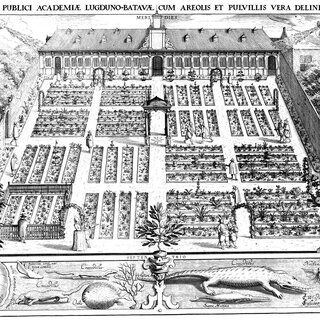
Figure 1
One of the early tulip lovers was Carolus Clusius, a botanist in Leiden. He grew some of the first tulips in Europe, and his garden quickly became famous. In fact, his flowers were so rare that some were stolen and later turned up in the garden of a Viennese aristocrat who claimed she had no idea how they got there.
Still, the passion only grew. As writer Anna Pavord later put it, tulips became “the ultimate status symbol, the definitive emblem of how much you were worth.”
By the early 1600s, tulips were more than flowers. They were a sign of success, a way to show the world you’d made it.
The Price of Beauty: When Tulips Became Gold

Figure 2 By 1634, tulip mania had taken over the Netherlands. Everyone wanted tulip bulbs, and people from all walks of life joined merchants, artisans, and even farmers.
At first, people bought tulips to enjoy them. But as prices kept rising, owning tulips became a way to make money. Soon, tulip bulbs were being traded like luxury goods.
By 1636, the trade had become so intense that tulip markets were set up on the Amsterdam Stock Exchange. Tulips were no longer just plants, they were investments.
Rare bulbs, especially the beautifully streaked “broken tulips,” became incredibly valuable. A single bulb could sell for 4,000 to 5,500 florins ($1 million equivalent in today’s valuation) which is roughly the cost of a grand house in Amsterdam’s Grand Canal.
People began buying bulbs on credit, convinced they could sell them later for a profit. Some even traded contracts for bulbs they didn’t own yet, betting that prices would keep climbing.
Streets turned into busy trading floors. Deals were made over drinks, and fortunes were built overnight. Farmers sold their land, craftsmen their tools all to buy tulips.
For a brief, glittering moment, tulips were not just flowers. They were a symbol of wealth, a promise of fortune, and a mirror of human greed.
The Fall: When the Petals Dropped

Figure 3 Then, as quickly as it began, everything fell apart.
In February 1637, at an auction in Haarlem, buyers suddenly refused to pay the usual high prices. Panic spread. Sellers rushed to sell their bulbs, but no one wanted to buy.
Within weeks, prices collapsed. Fortunes vanished overnight. People who had borrowed money to buy bulbs went bankrupt. Tulip traders who thought they were rich were left with nothing but worthless contracts.
By 1638, the tulip market was back to normal. The same bulbs that had once cost a fortune were suddenly worth little more than ordinary flowers.
The dream had wilted.
Was It Really That Bad?
The real damage was social and emotional. Families lost savings, friendships broke apart, and reputations were ruined. For many, the tulip craze left behind a deep sense of shame and regret.
Moral reflection followed soon after. Dutch Calvinists called it divine punishment for greed and pride. Preachers used it as a warning that even the smartest and richest could lose their sense of reason.
Lessons from Tulip mania: The Blueprint of Every Bubble
Tulipomania gave us one of the first clear examples of how financial bubbles form and burst. The same pattern has repeated ever since from the South Sea Bubble to dot com stocks to housing markets.
Here’s how it happens:
Novelty sparks interest. Something new or exciting captures attention. It feels different. Revolutionary. Hard to ignore.
Prices surge. Demand skyrockets as more people rush in. Rising prices validate the story, drawing in those who fear missing out.
Speculation replaces logic. Buyers stop asking, “Is this worth it?” and start thinking, “Prices will keep rising. ”Prices detach completely from fundamentals. Risk is rationalized away.
The market peaks. Confidence hits its limit; early investors quietly sell. A small trigger changes sentiment. Often, nothing dramatic.
The collapse. Panic spreads, prices crash, and fortunes vanish. Participants are left asking how something so obvious now felt so invisible then.
No matter the time or place, the pattern is the same hope, greed, denial, and despair.
Our Final Thoughts
The story of Tulipmania isn’t really about flowers. It's about how easily excitement can turn into obsession, and how the promise of quick wealth can make even sensible minds go astray.
The Dutch tulip bubble may have happened nearly four centuries ago, but its lesson still holds true:
When enthusiasm outgrows reason, every market no matter how beautiful eventually loses its bloom.That brings us to the end of our blog. With many more stories, insights, and lessons to come. Stay tuned, stay curious, and stay invested. Until next time!
References
Tulip Mania: Lessons from a 17th Century Economic Bubble. World History Journal. Retrieved fromhttps://worldhistoryjournal.com/2024/10/06/the-tulip-mania-a-blooming-bubble-of-17th-century-holland/ World History
“Tulip mania.” Wikipedia. Retrieved from https://en.wikipedia.org/wiki/Tulip_mania Wikipedia
Hayes, A. (2025, July 09). Tulipmania: About the Dutch Tulip Bulb Market Bubble. Investopedia. Retrieved from https://www.investopedia.com/terms/d/dutch_tulip_bulb_market_bubble.asp Investopedia
“Was Tulip Mania really the first great financial bubble?” BBC News. Retrieved from https://www.bbc.com/news/business-51311368
Chancellor, Edward. Devil Take the Hindmost: A History of Financial Speculation. Princeton, NJ: Princeton University Press, 1999.
Disclaimer-This article is for educational and informational purposes only and should not be considered as investment advice or a recommendation to buy or sell any securities or adopt any investment strategy.


Comments